
The Chess Improver: the psychology of not winning the won game
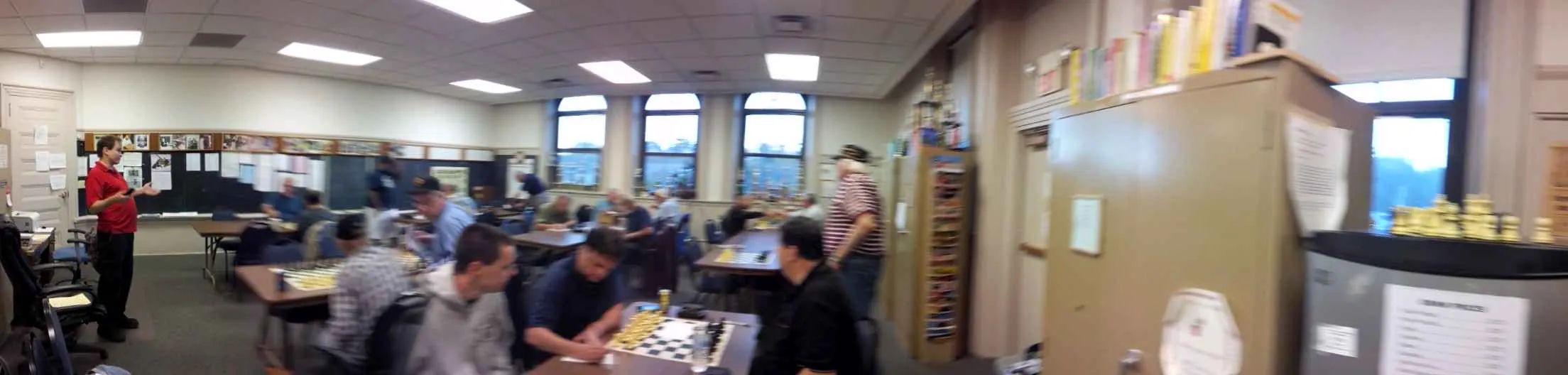
I published my third post on the blog The Chess Improver. It covers my third round game in the current Pittsburgh Chess Club Tuesday night tournament, in which I was very disappointed because I had a won game but failed to actually win the game!
“The psychology of not winning the won game.”
(The original Chess Improver site is no longer active; the rescued article follows below.)
We’ve all experienced this: building up an overwhelming position at the board, perhaps winning material or having a huge attack, and knowing (not just hoping) that we have a won game, and that it is just a matter of time. But the opponent is stubborn and keeps fighting, perhaps surprising us with unexpected or strange counterplay. Maybe it looks sound, or maybe it looks like unsound but practically justifiable desperation.
Sometimes we start drifting, and notice that we haven’t made progress, or worse, the opponent’s counterplay is strangely working. Did we miss a win somewhere? Dis we miss a refutation?
And finally, maybe we get into a position that is clearly no longer truly advantageous. Somehow it’s looking like a draw. Now what? Anger? Self-reproach? A last-ditch attempt at reclaiming an advantage? Our confidence is shaken. We don’t know if we really know how to play this frustrating game called chess. How do we regroup and continue playing? Or should we even continue playing? Should we offer a draw? Or should we believe that since we outplayed our opponent for so much of the game, we are better and “deserve” to win, and therefore we can try again for a winning advantage?
In my 3rd round game in the current Pittsburgh Chess Club Tuesday night tournament, I played an opponent whom I have three wins and three losses against in the past several years (rated USCF 2200). I went into the game vowing not to get emotional about seeking “revenge” for the last three games we played (all of which were my losses).
The game took some fascinating turns. Out of the opening, as Black I had a clear advantage. But my opponent deliberately offered what I thought was a Pawn sacrifice, in an attempt to free his position. I accepted the challenge, only to find that his real plan was to sacrifice both a pawn and an exchange! Although unsound, this was quite creative and disruptive to me over the board, and I did not play optimally in return. Instead of accepting the challenge and keeping the exchange, I gave it back and retained a Pawn advantage. However, consolidation proved difficult. I missed some tactical winning shots in the ensuing middlegame, and ended up in a position in which the best play for both sides was a draw by repetition. I was upset by the knowledge that I must have missed a win somewhere, but I also knew that if I did not take the repetition, I would have to lose back the Pawn, in which case the position was going to be a draw anyway. Given that I did not trust my mental abilities at the late hour (11:00 PM, the last game still in progress, with the tournament director waiting to close up the club, and time was getting low on the clock for both me and my opponent), I had no reason to continue the game and risk playing badly for a loss rather than a draw. So I accepted the draw offer.
In the past, I have sometimes played on despite the signs of mental tiredness and no realistic winning chances, and lost games in which I was a Pawn up. I was happy that this time around, I did not. I think my mind was still on the recent Sinquefield Cup last round game between Carlsen and Aronian in which Aronian won a Pawn and kept playing for a win and ended up losing instead.